Rider – Stunt Bike Racing
- 4.3
- Rating
- 100.00M
- Installs
- Free
- Price

 Analysis by App-foxy
I approached Rider – Stunt Bike Racing expecting a quick arcade distraction, and that is exactly where it works best. It is a motorcycle game from Ketchapp built around short attempts, simple touch control, and the satisfaction of landing a difficult flip without losing your run. I found it easy to understand within seconds, but much harder to play consistently once the track began demanding better timing.
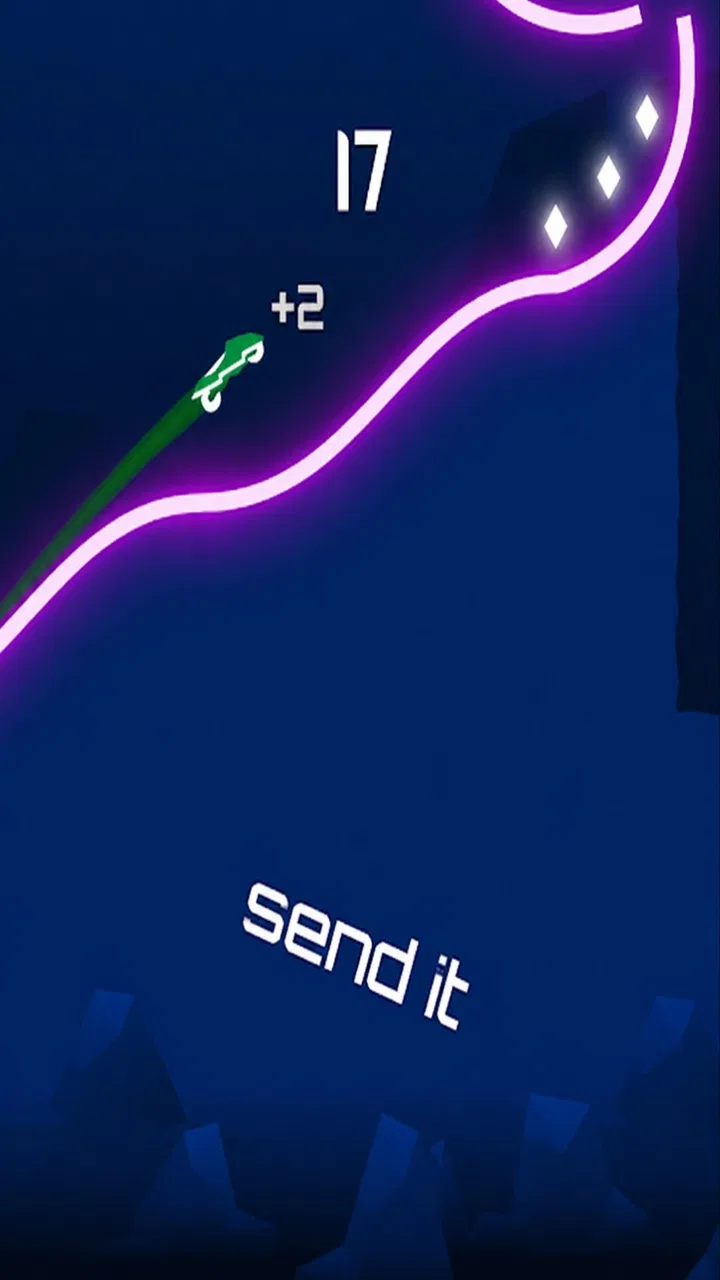
The basic appeal is immediate: your bike moves forward, and you control its rotation while it is airborne. That small idea creates a surprisingly tense loop. A jump that looks safe can become a crash because the front wheel is slightly too low, while a daring rotation can turn into a clean landing if I release at the right moment. It is not a realistic racing simulator, and it does not try to be one. This is a fast, restart-friendly arcade experience designed for brief sessions.
What the first few minutes really feel like
The game is free to download and suitable for Everyone, which makes it an easy recommendation for someone who wants a casual game without learning a complicated control scheme. Its Android listing shows a minimum operating system of 7.0, and the current version is 3.04.0.05. On a compatible phone, the important part is not configuration; it is getting comfortable with the rhythm of acceleration, airtime, rotation, and landing.
You May Also Like

 AccuWeather: Weather Radar
AccuWeather Review: A Quick, Clear Forecast for Everyday Decisions
For everyday plans, the best forecast is the one you can understand quickly. AccuWeather makes rain timing, radar, and local conditions easy to act on, with a few trade-offs.

 Hill Climb Racing
Why Hill Climb Racing Still Turns Crashes Into One More Run
A tiny car, a bumpy hill and one more upgrade: Hill Climb Racing keeps resurfacing because its simple chaos makes every near-miss feel personal.

 AliExpress - Shopping App
AliExpress Makes Global Shopping Feel Personal, but Shoppers Bear the Risk
AliExpress turns a global marketplace into a pocket-sized discovery engine. Its reach is useful, its shopping loop compelling, and its trade-offs easy to miss.

 Lords Mobile: Kingdom Wars
Lords Mobile Is a Kingdom-Building Routine, Not a Quick Match
A case-by-case verdict on the building, battles, device demands, and social commitments that make Lords Mobile rewarding for some players and exhausting for others.

 PDF Scanner app - TapScanner
TapScanner Makes Paperwork Easier to Capture, Check, and Share
TapScanner makes scanning with a phone feel less like a rescue operation and more like a dependable step in getting work done. Its capture tools are useful, though not flawless.

 Block Blast!
 Shows How Much a Puzzle Game Can Leave Out
A quiet grid game shows why puzzle players increasingly value instant clarity, repeatable skill and low-pressure play—and where the genre still needs to catch up.
More From Our News Desk
View All News


I would not describe the opening as a traditional tutorial with a long explanation. The useful learning happens through trying, failing, and immediately attempting the same kind of jump again. That design suits the genre because a mistake costs very little time. Instead of stopping to study instructions, I could watch the bike’s angle, notice what went wrong, and adjust on the next attempt.
The game has become a very established choice in mobile arcade gaming. It carries an average rating of 4.3 from around 1.5 million ratings and has passed 100 million installs. Those figures make sense to me: the controls are approachable, the sessions are compact, and the central stunt mechanic is easy to show to another person. At the same time, popularity should not be mistaken for unlimited variety. The experience is strongest when I want a focused skill challenge rather than a large adventure.
My first useful piece of advice is to avoid treating every jump as an invitation to perform a full stunt. Early progress is usually more reliable when I prioritize a stable landing. A modest rotation that keeps both wheels pointed toward the track is often better than an ambitious flip that looks impressive but leaves the bike upside down. Once I understood that, the game felt less random and more like a timing exercise.
Starting without overthinking the controls
The first setup is refreshingly small. I did not need to build a rider, choose a complicated bike configuration, or learn a set of unrelated buttons before playing. The game gets to its main action quickly, which is important for a title intended for short breaks. I could pick it up while waiting for a bus, play a few attempts, and close it without feeling that I had abandoned a long mission.
For a first-time player, I suggest holding the phone comfortably with both hands and using a light touch rather than pressing aggressively. The challenge is not physical force. It is recognizing how much rotation is happening during a jump and releasing or changing the input before the landing becomes unrecoverable. A tense grip makes it easier to overcorrect, especially when a clean attempt is close to succeeding.
The visual simplicity also helps with setup. There is little to distract me from the bike and the track. That clarity is useful on a smaller screen, although it means the game does not offer the visual spectacle of a more elaborate motorcycle title. If your priority is detailed environments, realistic physics, or a broad garage system, this will feel intentionally lightweight rather than richly featured.
One practical trade-off concerns spending. The game is free, but in-app purchases range from $0.99 to $79.99 per item. I would begin without buying anything and first decide whether the core control loop holds my attention. The free entry point is enough to test whether I enjoy the timing challenge. If I dislike repeated attempts, optional spending will not solve that underlying issue.
The first meaningful success is a controlled landing
The first success I recommend chasing is not the most spectacular flip. It is completing a jump with the bike aligned and continuing forward. That moment teaches the central skill: the stunt is only half the job. The landing determines whether the attempt becomes progress or another restart.
I found it helpful to divide each jump into three mental stages. Before takeoff, I decide whether the obstacle looks like a safe place to practice or a situation where I should stay conservative. During the flight, I watch the motorcycle’s body rather than the background. Near the landing, I stop thinking about the trick and focus entirely on wheel placement. This simple separation prevents the common mistake of continuing to rotate after the stunt is already complete.
Another useful habit is to make one adjustment at a time. If a bike lands nose-first, changing several things at once makes it difficult to know what helped. I prefer to reduce the rotation slightly on the next attempt and compare the result. Because restarts are quick, this turns failure into a small experiment instead of a frustrating mystery.
That approach also explains why the game can feel satisfying despite its minimal controls. There are only a few actions to manage, but the timing window can be unforgiving. A successful sequence feels earned because I can identify the correction that made it work. For me, that is more rewarding than winning through upgrades or automatic assistance.
Why spectacular attempts often fail
The most common confusion for new players is assuming that a successful flip automatically means a successful run. It does not. The motorcycle can complete a rotation and still crash if the wheels meet the surface at the wrong angle. I had to stop judging a jump by how much airtime I got and start judging it by how prepared the bike was for contact with the track.
It is also easy to mistake a failed attempt for a control problem when the real issue is timing. If the bike rotates too far, the correction usually needs to begin earlier, not necessarily become stronger. A late, dramatic input can make the result worse. Small changes made before the bike reaches the peak of its jump tend to be easier to understand.
Another point that may surprise first-time players is how much the approach to a jump matters. The same rotation can behave differently depending on the speed and angle carried into the obstacle. I try not to copy a previous input mechanically. Instead, I look at the bike’s position as it leaves the ramp and adapt to that attempt.
When I am stuck, I use a short reset routine: take one attempt with no stunt ambition, observe the takeoff, then try one controlled rotation. This prevents a string of impatient crashes. It also gives me a clearer sense of whether the problem is my timing or the way I am approaching the obstacle.
How to decide whether Rider fits your play style
The best reason to install Rider is its immediate skill loop. It asks for attention without demanding a long commitment. I can play while taking a short break, but I can also spend longer trying to improve a difficult sequence. That flexibility makes it more useful than many casual games that are entertaining only for the first few minutes.
It is particularly suitable for players who enjoy retrying a challenge until the movement feels natural. People who like precision arcade games, stunt attempts, and quick restarts will probably understand its appeal. It is also a reasonable choice for a younger player because the content rating is Everyone and the controls are easy to demonstrate, though the repeated failure-and-retry structure may not suit someone who prefers relaxed play.
I would be more cautious about recommending it to someone looking for a complete racing career. This is not the right choice if you want long races against a field of opponents, deep vehicle tuning, realistic motorcycle handling, or a story that gives each session a larger purpose. A conventional racing game will be better for competition and progression, while a physics-focused stunt game may be better for experimentation. Rider sits between those ideas, using motorcycle movement as a compact arcade puzzle.
Compared with endless runners, it gives me more control over the crucial moment. I am not simply reacting to obstacles at a constant pace; I am managing the bike’s attitude in the air. Compared with full stunt simulators, it is much easier to start but less interested in realism. That middle ground is its strength and its limitation: the game is approachable because it simplifies the motorcycle, but players wanting simulation depth may quickly reach its boundaries.
A realistic everyday session
Imagine having ten minutes before an appointment. I can open the game, make a few attempts, and focus on one problem: keeping the front wheel from dropping too early after a jump. I do not need to remember a complicated mission, assemble a team, or return at a specific time. If I succeed, I get a clear little win. If I fail, I can close the app without losing the value of the practice.
That same structure works during a longer evening session, but the mood changes. After repeated attempts, I may start making worse decisions simply because I want to force a success. The sensible response is to pause rather than spend more aggressively or play through frustration. The game rewards concentration, and once my timing becomes hurried, another attempt is not necessarily productive.
For this reason, I treat it as a game of short focused bursts. A useful personal rule is to stop after a clean success or after several careless crashes. That keeps the challenge enjoyable and prevents the simple control scheme from becoming irritating. It also makes returning later feel fresh instead of like continuing an argument with the same obstacle.
What can make the experience less comfortable
The main limitation is repetition. The central action is strong, but it remains the central action throughout the experience. If I need constant novelty, a larger arcade collection may hold my attention better. Rider’s appeal comes from refining a narrow skill, not from continually introducing new genres of activity.
Difficulty can also feel abrupt when a jump demands a more exact landing than the previous one. That is part of the intended challenge, but it may look unfair until I recognize the importance of approach angle and early correction. The game is not always generous with a nearly correct landing, so players who prefer forgiving controls may need patience.
The free-to-play structure deserves a practical look as well. Since purchases are available, I would not install it with the assumption that every progression-related convenience will be free. I would first play enough to decide whether the basic loop is enjoyable on its own. That is the safest way to evaluate the app without letting optional spending shape the decision.
There is also a difference between being easy to start and being easy to master. The first successful movement can happen quickly, but consistent landings require observation. Someone may download it expecting a passive time-killer and discover that it demands more concentration than a typical idle arcade title. I see that as a positive when I want interaction, but it is a genuine mismatch for relaxed, hands-off play.
Small techniques that improve consistency
My most useful technique is to watch the landing zone before the stunt begins. Instead of staring at the bike throughout the entire jump, I identify where the wheels need to meet the track and then use the bike’s angle to guide the correction. This reduces the panic that comes from reacting only at the last instant.
I also recommend separating practice goals. On one attempt, work on leaving the ramp cleanly. On another, focus on completing the rotation. On a third, ignore style and concentrate on the landing. Trying to perfect all three at once makes it harder to learn because every crash has several possible causes.
A further insight is that restraint can be a form of progress. When I stopped trying to perform a stunt on every available opportunity, I reached difficult sections more consistently. That gave me more chances to study later jumps, which was ultimately more valuable than collecting a string of dramatic but unsuccessful attempts.
Finally, I avoid changing my grip or playing position between attempts unless I have a clear reason. Small differences in how the phone is held can make a familiar touch gesture feel different. Keeping the setup stable turns the game into a cleaner test of timing rather than a changing physical experiment.
My recommendation after giving it a fair try
Ketchapp has made a focused arcade game that understands the value of immediate feedback. Rider – Stunt Bike Racing does not need a complicated introduction because its appeal appears in the first jump. The challenge comes from turning that first understandable action into reliable control, and I appreciate that the game lets me practice without a long penalty for failure.
I recommend it to anyone who wants a free motorcycle-themed game for short, skill-based sessions and enjoys improving through repetition. Install it if the idea of correcting a bike in midair sounds satisfying. Skip it if you need realistic racing, deep customization, constant story progression, or a calm experience that does not punish imprecise timing.
My final advice is to judge it by the quality of one successful landing rather than by the size of its feature list. Start conservatively, learn how the bike leaves each jump, and make small corrections before the landing becomes urgent. Once that rhythm clicks, the game becomes an effective little test of patience and timing. It is simple, sometimes demanding, and best enjoyed as a compact arcade challenge rather than as a full motorcycle simulation.
FAQs for Rider – Stunt Bike Racing
01What devices are compatible with Rider – Stunt Bike Racing?
Rider – Stunt Bike Racing is compatible with most Android and iOS devices. For Android users, the app requires Android 5.0 and up, while iOS users need iOS 9.0 or later. It's optimized for both smartphones and tablets, ensuring a smooth gaming experience across different screen sizes.
02Does Rider – Stunt Bike Racing require an internet connection to play?
Rider – Stunt Bike Racing can be played offline, making it perfect for on-the-go gaming without the need for a constant internet connection. However, some features, like leaderboards and in-app purchases, do require online access to function effectively.
03Are there in-app purchases in Rider – Stunt Bike Racing?
Yes, Rider – Stunt Bike Racing offers in-app purchases. Players can buy additional bikes, unlock special features, or remove ads. These purchases enhance the gaming experience but are not necessary to enjoy the core gameplay, which remains fully accessible even without spending money.
04Is Rider – Stunt Bike Racing suitable for children?
Rider – Stunt Bike Racing is rated for players aged 3 and up, making it suitable for children. The game features simple controls and vibrant graphics that appeal to younger audiences. However, parents should be aware of in-app purchases and ensure appropriate settings are enabled to prevent unintended spending.
05How can I improve my performance in Rider – Stunt Bike Racing?
Improving performance in Rider – Stunt Bike Racing involves mastering the controls and practicing regularly. Players should focus on timing their jumps and flips correctly. Experimenting with different bikes, each with unique attributes, can also provide advantages on various tracks. Watching tutorials and tips online can further enhance skills.
Pros
- Intuitive controls make gameplay easy to learn.
- Stunning graphics enhance the visual experience.
- Variety of levels keeps the game engaging.
- Quick load times for uninterrupted play.
- Frequent updates with new challenges.
Cons
- In-app purchases can be costly over time.
- Limited customization for bikes and riders.
- Some levels feel repetitive after a while.
- Occasional bugs disrupt gameplay flow.
- Requires stable internet for optimal performance.

Rider – Stunt Bike Racing
Gallery